
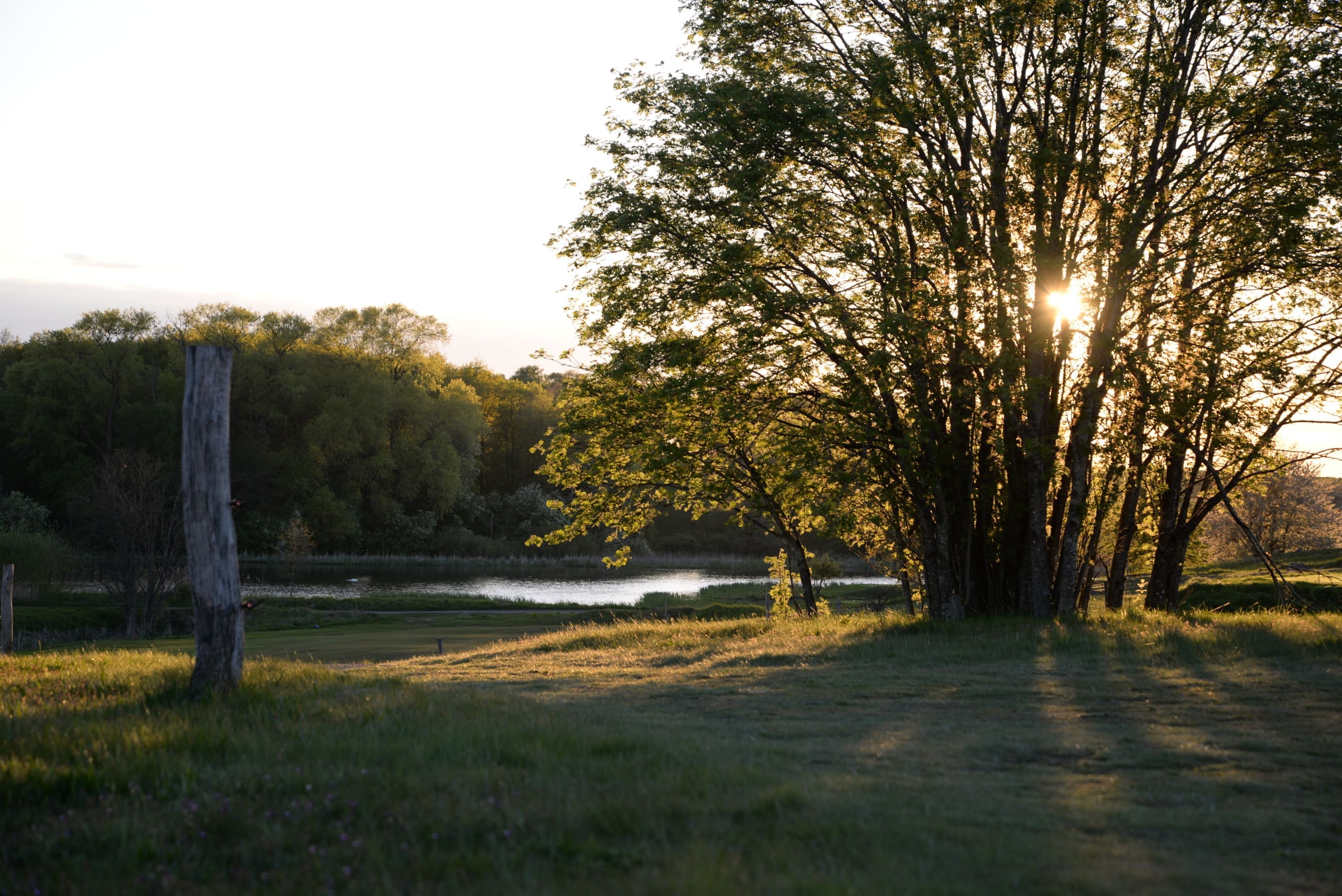
That sound, soft and unhurried, was recorded close to Glomsjön, the lake at the southern edge of LAGK. Fed by rain, every green and every tee on the course depends on it.
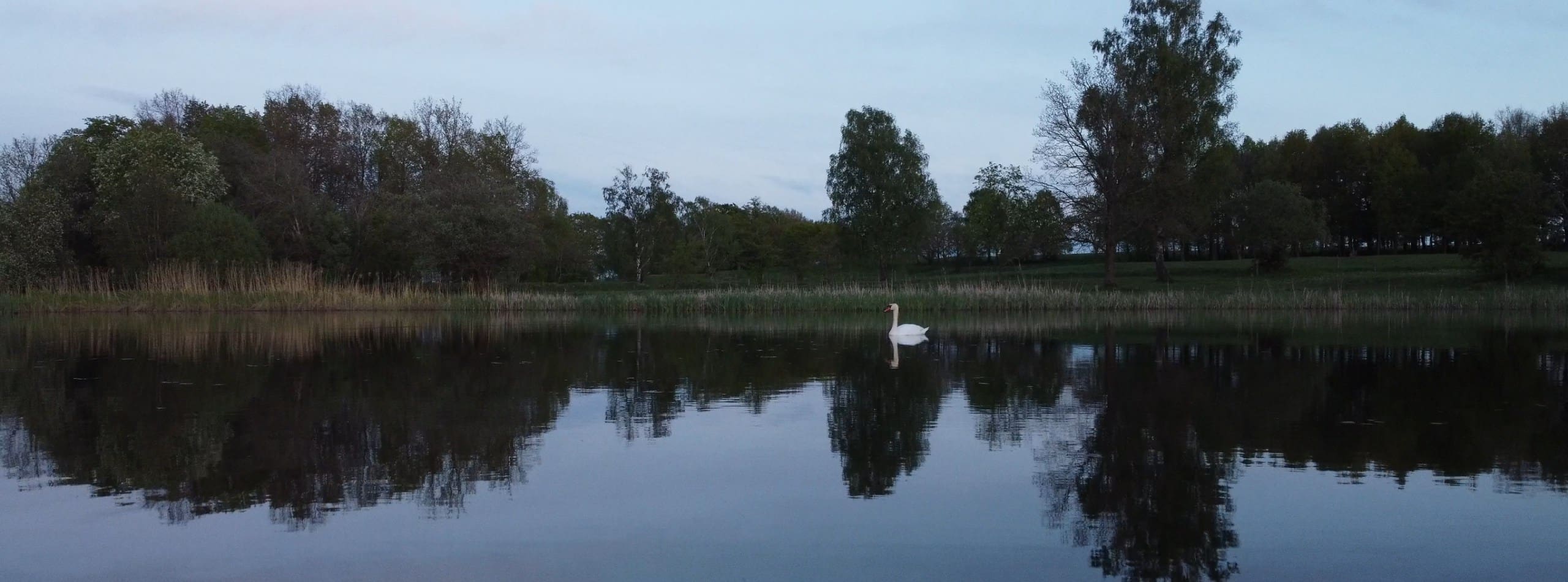
While the fairways and rough receive nothing but rain, three main irrigation pipes are connected to a single pumping point on Glomsjön that secures the irrigation of the greens and tees throughout the season. Groundwater is never touched — by now the standard for many Swedish golf clubs. Why does that matter? Skåne sits on the dry edge of Sweden’s hydrological map. Every litre not taken from the ground stays available for the municipal drinking-water supply, and therefore for the local population.
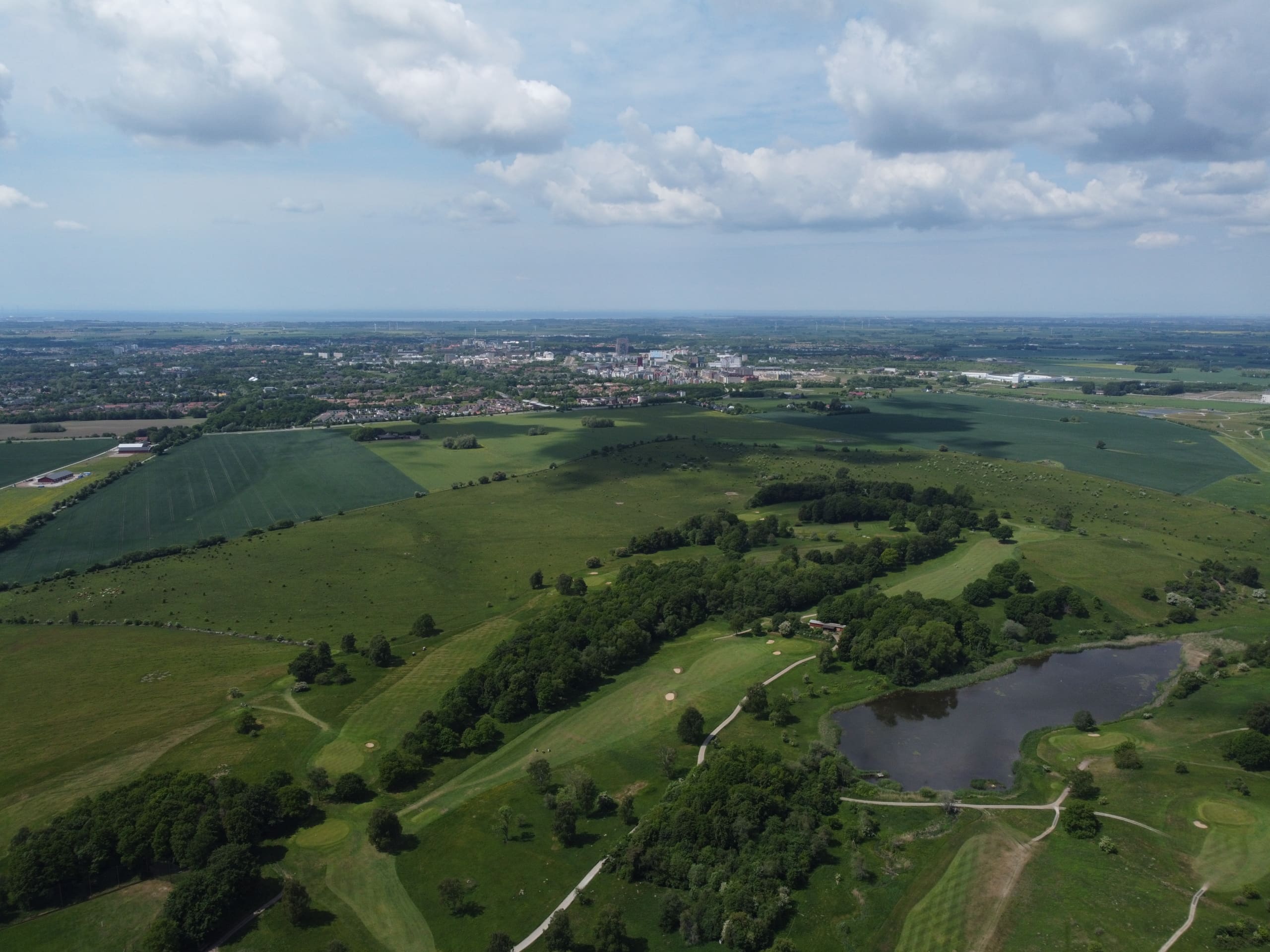
Over the course of a year, LAGK irrigates with 11 000 m³ of water. A standard Swedish golf course also waters fairways and sometimes the rough — using approximately three times more, and roughly as much as an agricultural farm in Sweden [1].
There is more detail behind the number. On four greens, sensors continuously monitor soil moisture, salt levels, and temperature. Course manager Viktor Sjöö and the greenkeeping team use that live data to decide manually when and how much to irrigate, which prevents automated over-watering.
The industry standard often pushes for drainage across the entire course, accelerating water export from the landscape and reducing groundwater recharge [2]. By limiting drainage to the 1.5 ha of greens, LAGK allows the remaining landscape to function as it naturally would. Water can be stored in the soil, groundwater replenishes, and species that depend on wet or moist soil conditions can thrive.
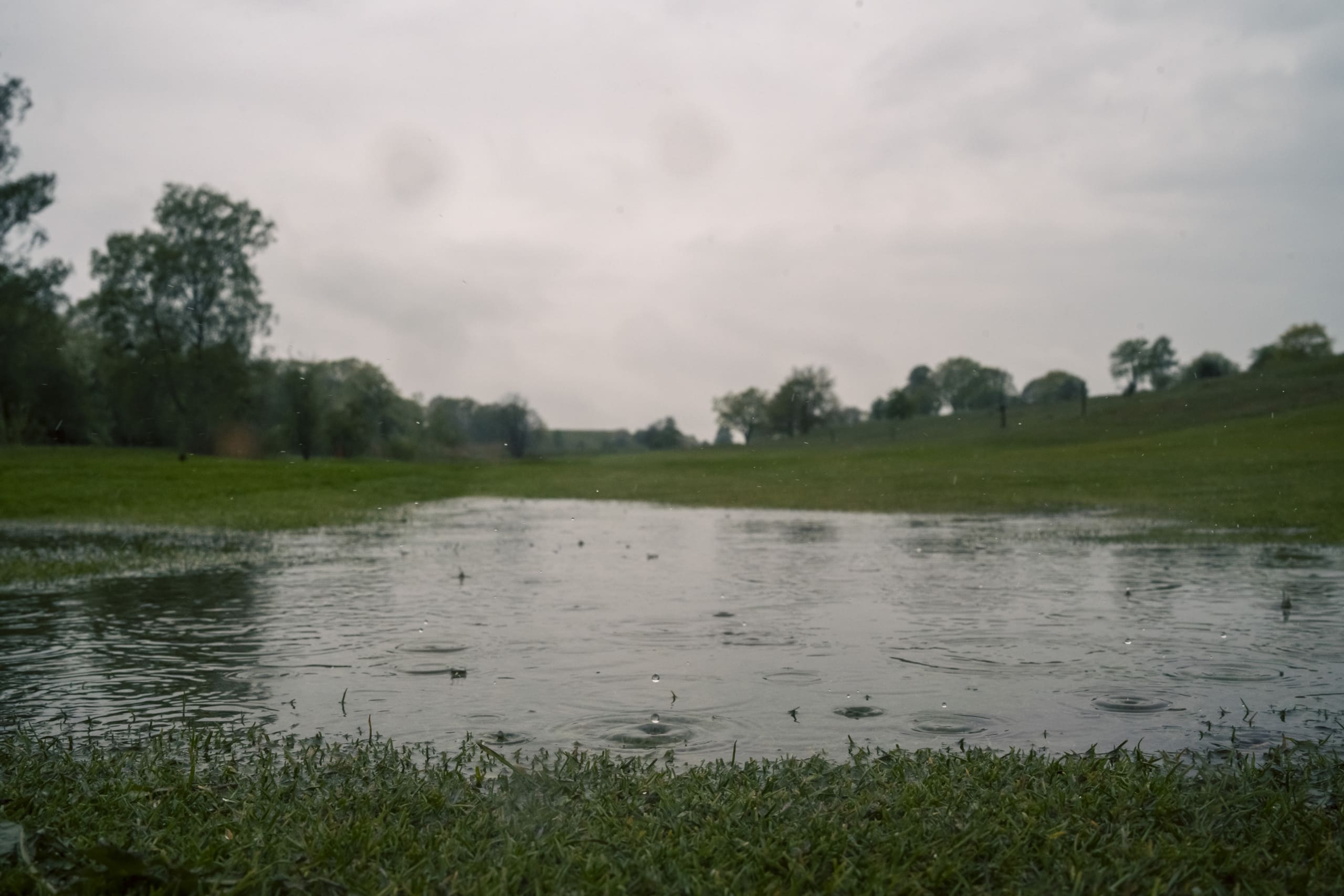
Model-based future outlooks show that, due to a changing climate, extreme weather events — prolonged droughts and intense rainfall — are becoming more frequent in southern Sweden [3]. Both extremes stress water systems in different directions. Course design choices at LAGK address both: a course that holds water in the landscape rather than draining it away is more resilient in drought, and a course that allows infiltration rather than rapid runoff handles intense rainfall better, too.
At LAGK, only the greens and a slope area on the 17th fairway are engineered for drainage. Beneath each putting surface lies a layered profile made of sand, with a network of underground pipes leading to collection wells where seeping water gathers and is then channelled into Glomsbäcken — the creek that meanders north across the course, with Glomsjön as its source.
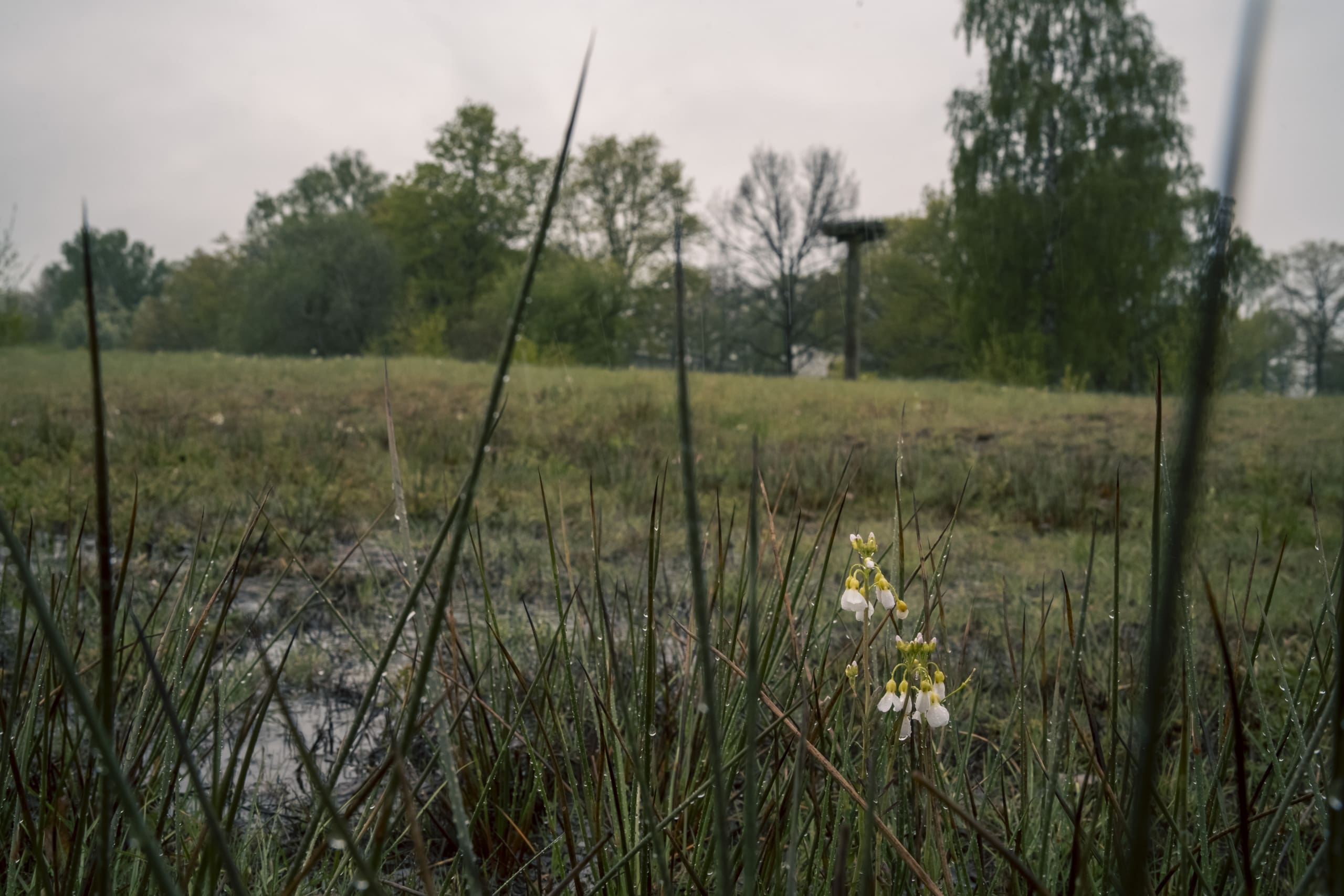
By allowing natural hydrological processes to continue on the fairways and the roughs, the course maintains habitat for moisture-dependent species. The orchids and amphibians are not incidental. They are a direct indicator that the water management here is functioning.
Also read
To read further
[1]
Swedish Board of Agriculture (Jordbruksverket, 2024): Official statistics on agricultural land use in Sweden, providing national context for how land and water resources are managed.
Statistics Sweden (SCB, 2022): Environmental statistics including indicators on water use in Sweden, relevant for understanding broader water consumption patterns.
STERF (2014): Research on sustainable water management in golf, focusing on irrigation strategies and efficiency in Nordic climates.
[2]
USGA (Skorulski & O’Brien, 2016): Explaining how drainage systems on golf courses are designed to remove excess water, maintain playable surfaces, and manage soil moisture conditions.
[3]
Swedish Meteorological and Hydrological Institute (SMHI, 2025): Climate data and projections used for climate and vulnerability analyses, including rainfall trends and hydrological changes relevant to land and water management.
